

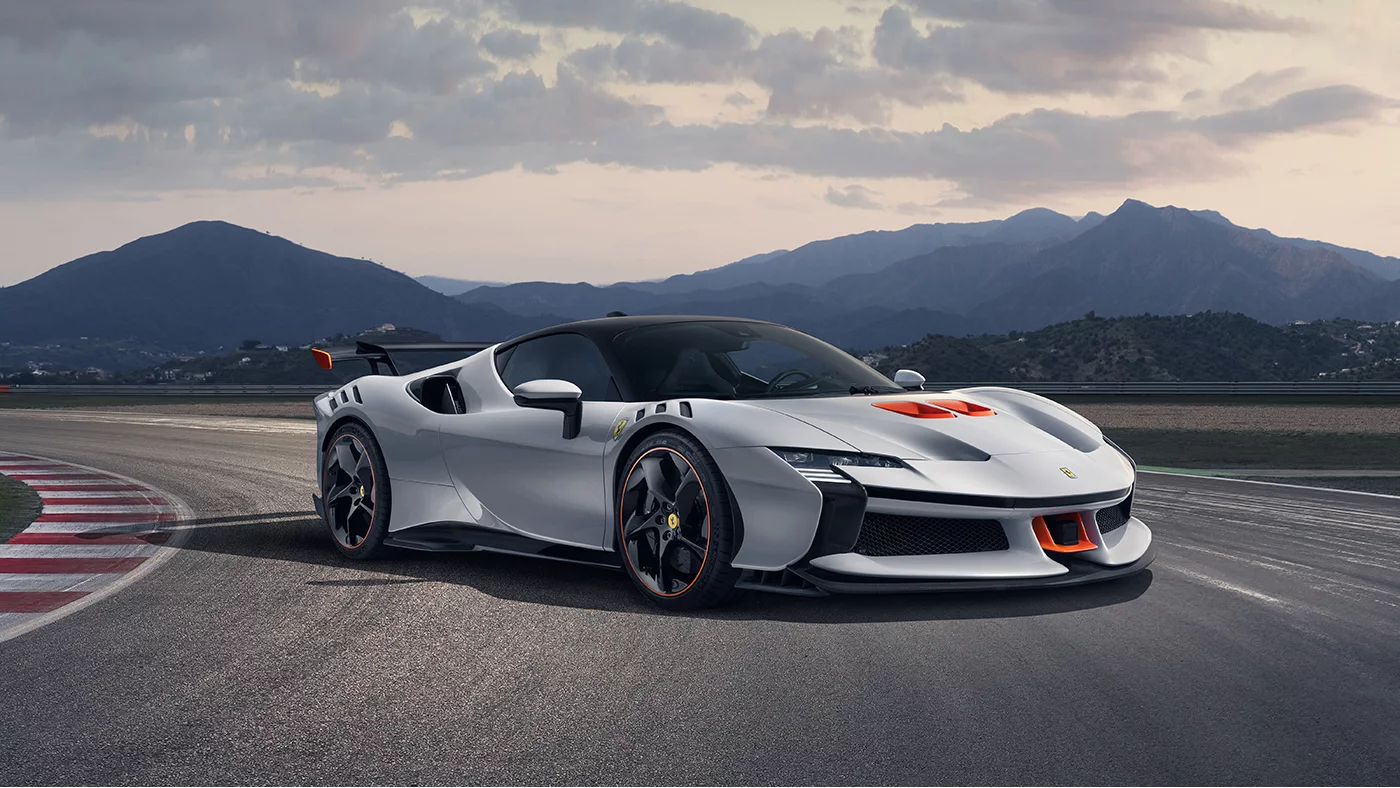
Here at EngineFirm.com, we’ve always lived by a simple mantra: Power is nothing without precision. For decades, the automotive world’s primary benchmark for performance was a single, thunderous number: horsepower. But as we accelerate further into the 21st century, a seismic shift is underway. The very definition of “performance” is being rewritten, not just by powertrain engineers, but by software coders, material scientists, and data analysts.
The modern vehicle is no longer just a mechanical marvel; it’s a rolling supercomputer. This evolution is pushing the industry toward a new triad of performance metrics—efficiency, integration, and intelligence. Let’s break down these three pillars that are redefining what it means to build a high-performance vehicle.
1. The Efficiency Equation: More Miles, Less Mass
The pursuit of power will always be core to performance, but now it’s inextricably linked to efficiency. This isn’t just about fuel economy or EV range; it’s about extracting maximum output from every joule of energy and every gram of material.
Electrification’s Double-Edged Sword: Electric motors deliver instant torque, redefining acceleration. However, the challenge is the battery—its weight, its energy density, and its thermal management. The real engineering prowess is in developing more powerful and compact battery cells, more efficient cooling systems, and lighter battery enclosures. The performance war for EVs is now a battle for watt-hours per kilogram.
Lightweighting 2.0: Using carbon fiber and aluminum is now standard practice. The next frontier is in advanced high-strength steels, magnesium alloys, and even 3D-printed metamaterials that offer incredible strength-to-weight ratios. Every kilogram saved means less energy needed for propulsion, directly enhancing both performance and efficiency.
Friction is the Enemy: Engineers are waging a silent war on mechanical losses. This includes everything from low-friction piston rings and ultra-efficient transmission fluids to aerodynamic tweaks that reduce drag coefficients to previously unimaginable lows. The goal is to ensure every bit of power generated actually reaches the road.
2. The Integration Imperative: Hardware and Software Become One
A modern performance car is a network of over 100 interconnected ECUs (Electronic Control Units). The magic happens when these systems don’t just operate in parallel, but are deeply integrated to work in perfect harmony.
The Chassis as a Central Computer: Take a high-performance corner. The stability control system talks to the adaptive suspension. The electric power steering communicates with the all-wheel-drive system. The rear-wheel steering adjusts based on input from the camera and radar. This isn’t a series of reactions; it’s a symphony of systems working in a coordinated, predictive manner to deliver unparalleled grip and driver confidence.
Over-the-Air (OTA) Updates: Performance is no longer frozen at the factory. Manufacturers can now refine a vehicle’s character after purchase. A simple software update can optimize throttle response, recalibrate transmission shift points, or even improve braking performance. The car you buy today might be faster and smarter next year.
3. The Intelligence Shift: Data is the New Fuel
Performance is becoming predictive and personalized. Engineers are leveraging vast amounts of data to create vehicles that don’t just respond to the driver but anticipate their needs and the road ahead.
Machine Learning on the Move: Advanced algorithms can learn a driver’s style and preemptively prepare systems. Are you an aggressive track driver? The car might firm up the suspension and sharpen the throttle mapping as you enter a circuit. A more relaxed cruiser? It will prioritize comfort and range.
Simulation-Driven Design: Before a single physical prototype is built, engineers run thousands of digital simulations. They model airflow, stress test components, and simulate crash scenarios with incredible accuracy. This data-centric approach allows for faster development cycles and more innovative, optimized designs that would be impossible through trial and error alone.
Predictive Powertrains: By integrating GPS and map data, a vehicle can “see” the road ahead. It knows a steep hill is coming and can pre-condition the battery for optimal cooling. It knows a long descent is approaching and can preemptively plan regenerative braking strategies to recharge the battery. This is the pinnacle of intelligent efficiency.
The EngineFirm.com Perspective: The Engineer’s Role Evolves
For the automotive engineer, this new era is both a challenge and an opportunity. The skill set is expanding. Understanding thermodynamics and material science is as crucial as ever, but now it must be coupled with expertise in software architecture, data analytics, and electrical systems.
The future of performance isn’t about a single, glorious number on a spec sheet. It’s about the seamless, intelligent, and efficient application of power. It’s about building a machine that is not only powerful but also perceptive.
At EngineFirm.com, we are committed to providing the resources, insights, and community for the engineers and innovators who are building this future. The goal remains the same: to create the most thrilling driving machines on the planet. It’s just that the toolkit has gotten a lot more interesting.