

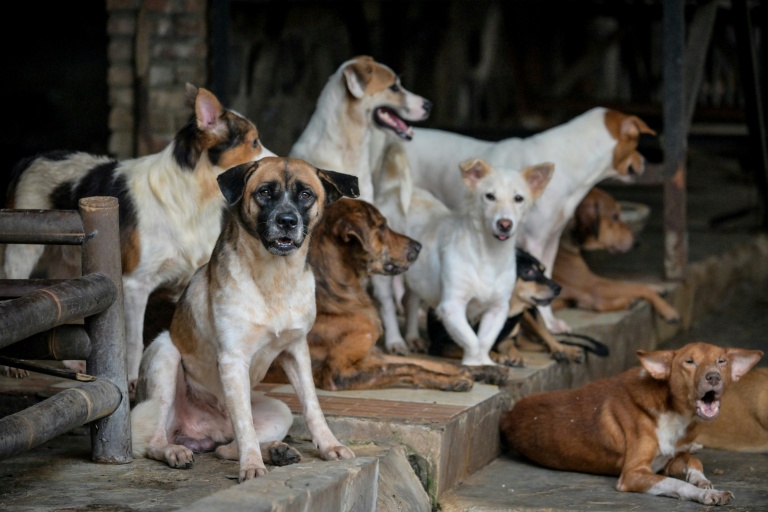
In a move that has ignited fierce debate across Indonesia, the provincial government of Jakarta recently enacted a full ban on the trade and consumption of dog meat. While celebrated by animal welfare groups as a landmark victory, the decision has exposed a deep cultural rift, pitting modern urban sensibilities against long-standing traditions and the livelihoods of a largely invisible industry.
The ban, officially implemented in early 2024, prohibits the slaughter, sale, and distribution of dog meat within the capital territory. Authorities cited a trifecta of reasons: overwhelming public concern for animal welfare, the significant risks to human health from unregulated slaughter, and the desire to align Jakarta’s image with that of a modern, international metropolis.
The Case for the Ban: Welfare, Health, and Modernity
For animal rights activists, the ban is the culmination of years of campaigning. Organizations like Dog Meat Free Indonesia (DMFI) have long documented the brutal conditions of the trade. Undercover investigations have revealed scenes of dogs being bludgeoned, blow-torched, and boiled alive in makeshift slaughterhouses, often in public markets.
“This is a monumental step forward for animal welfare in Indonesia,” said a spokesperson for DMFI. “Jakarta is sending a powerful message that such extreme cruelty is not acceptable in a civilized society. These animals endure unimaginable suffering from capture to slaughter.”
Beyond ethics, the health argument is a potent one. The unregulated nature of the trade poses serious public health risks. Dogs are often stolen pets or strays, collected from the streets with no health records. This creates a hotbed for the transmission of rabies, cholera, and trichinellosis. The World Health Organization (WHO) has explicitly linked the dog meat trade to the spread of rabies, a fatal disease still endemic in parts of Indonesia.
Furthermore, for the city’s governor and many of its younger, more cosmopolitan residents, the consumption of dog meat is seen as a backward practice out of step with Jakarta’s global aspirations. “We want to be a city known for its progress, not for a controversial and cruel trade,” argued one Jakarta-based professional. “This ban brings us in line with other major Asian cities that have taken similar stands.”
The Opposition: Tradition, Livelihoods, and Cultural Identity
However, the ban has been met with staunch opposition from traders, consumers, and cultural commentators who see it as an attack on their way of life.
For the vendors in markets like Cilandak, one of Jakarta’s last known hubs for dog meat, the ban is not an abstract ethical issue but a direct threat to their survival. Many are from the Minahasan community of North Sulawesi, where consuming rintek wuuk (“hairy fur” in the local language) is a deeply ingrained cultural tradition, often reserved for special occasions and social gatherings.
“This is our heritage. My father and grandfather were in this trade,” said one vendor, who asked to remain anonymous. “The government is taking away our livelihood without providing any alternative. What are we supposed to do now?”
Critics of the ban accuse the government of cultural imperialism, arguing that urban elites are imposing their values on minority communities. They draw parallels to the consumption of other meats, asking why cows, chickens, and pigs are deemed acceptable while dogs are not.
“This is not about health or cruelty alone; it is about hypocrisy and the erasure of minority cultures,” said a cultural anthropologist from the University of Indonesia. “The slaughter of all animals for food involves suffering. By singling out one tradition, the government is making a cultural judgment, not a purely logical one.”
A Nation at a Crossroads
Jakarta’s ban places it at the forefront of a growing movement in Southeast Asia. While the practice is already banned in some parts of Indonesia, like Central Java, it remains legal in many others. The national government has so far resisted calls for a country-wide prohibition, leaving it to regional authorities to decide.
The division in Jakarta thus reflects a larger national conversation. As Indonesia continues to develop and urbanize, it is grappling with the complex task of reconciling its diverse cultural traditions with evolving global norms on animal welfare and public health.
The path forward is unlikely to be simple. A successful implementation will require not just enforcement, but also sensitivity. Providing economic transition programs for affected vendors and fostering a dialogue about cultural practices, rather than simply condemning them, will be crucial to healing the divisions this ban has exposed.
Ultimately, the story of Jakarta’s dog meat ban is more than a story about what’s for dinner. It is a microcosm of a modernizing nation wrestling with its identity, where the lines between right and wrong, tradition and progress, are fiercely, and understandably, contested.