

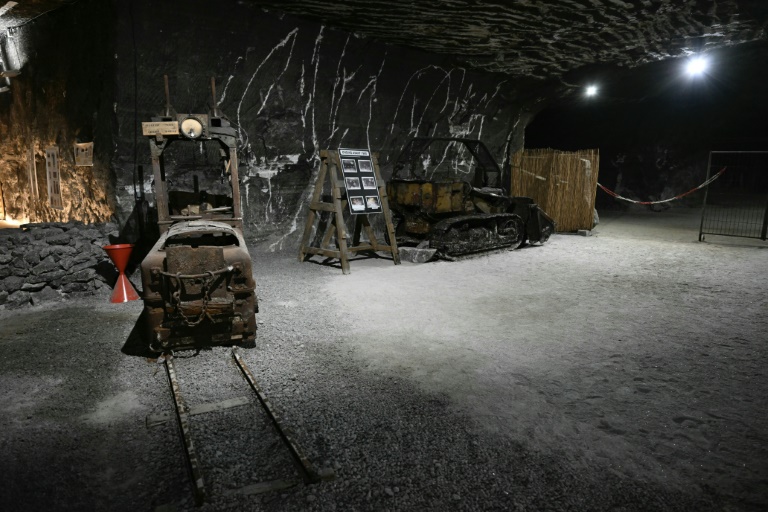
In a decisive move to bolster its economic sovereignty and green ambitions, the European Union is aggressively pursuing strategies to reduce its overwhelming dependence on China for rare earth elements—critical minerals that are the backbone of modern technologies and the clean energy transition.
The Critical Dependence
Rare earth elements—a group of 17 metals with unique magnetic and luminescent properties—are essential components in everything from electric vehicles, wind turbines, and smartphones to defense systems and medical devices. For decades, China has dominated this sector, currently controlling approximately 60% of global rare earth mining and a staggering 90% of processing capacity. This concentration creates significant vulnerabilities for the EU, which imports nearly 98% of its rare earth needs from China.
“The over-reliance on a single supplier represents a critical vulnerability for Europe’s green and digital transitions,” noted European Commission President Ursula von der Leyen in her 2023 State of the Union address, highlighting rare earths as part of a broader “de-risking” strategy.
A Multi-Pronged Approach
The EU’s response has evolved into a comprehensive strategy combining regulatory action, funding initiatives, and international partnerships:
1. The Critical Raw Materials Act
Central to the EU’s strategy is the groundbreaking Critical Raw Materials Act, adopted in 2024. The legislation sets ambitious benchmarks:
-
At least 10% of the EU’s annual consumption should come from domestic extraction by 2030
-
40% from domestic processing
-
25% from recycled materials
-
Not more than 65% of any strategic raw material from a single third country
2. Reviving Domestic Supply Chains
Europe is working to revitalize its own rare earth resources, with notable projects including:
-
The reopening of the Kiruna mine in Sweden, containing significant rare earth deposits
-
Development of the Norra Kärr deposit in Sweden
-
Exploration of potential resources in Greenland through partnerships with Denmark
3. Fostering Recycling and Innovation
The EU is investing heavily in circular economy solutions, including:
-
The REE4EU project developing innovative extraction technologies
-
Funding for urban mining initiatives to recover rare earths from electronic waste
-
Support for material substitution research to reduce rare earth requirements
4. Strategic International Partnerships
Recognizing that complete self-sufficiency is impractical, the EU is diversifying its partnerships through:
-
The EU-United States Trade and Technology Council focusing on supply chain security
-
Strategic partnerships with Canada, Ukraine, and Kazakhstan
-
The Global Gateway initiative, investing €300 billion in sustainable infrastructure, including mineral partnerships
Challenges and Complexities
The path to rare earth independence is fraught with challenges:
Environmental Concerns: Rare earth extraction and processing are notoriously polluting, creating tension with Europe’s stringent environmental standards. New projects face significant public scrutiny and regulatory hurdles.
Economic Viability: Competing with China’s established, subsidized industry remains difficult. European projects often face higher labor costs and stricter regulations.
Time Constraints: Building new mining and processing capacity takes years—time Europe may not have as it races to meet 2030 climate targets.
Geopolitical Considerations: While reducing dependence on China, the EU must navigate relations carefully to avoid escalating tensions that could disrupt other economic ties.
The Broader Context
The EU’s rare earth strategy is part of a larger global realignment. The United States has enacted similar measures through the Inflation Reduction Act, while Japan has maintained strategic reserves for years. This trend reflects a broader shift from globalization based on efficiency to globalization based on resilience.
As Thierry Breton, European Commissioner for Internal Market, stated: “We cannot allow ourselves to be dependent on third countries for materials that are so crucial for our twin transitions. This is about our economic security, but also about our ability to shape our clean industrial future.”
Looking Ahead
The EU’s efforts to secure rare earth supplies represent a fundamental rethinking of strategic autonomy in an era of geopolitical tensions and ecological urgency. While complete independence from China remains unrealistic in the short term, the diversification and resilience-building measures now underway could significantly reshape global supply chains.
Success will require sustained investment, technological innovation, and careful diplomacy. But for Europe, the stakes could hardly be higher: securing the minerals that will power its green future while ensuring it remains a competitive force in the industries of tomorrow. The race for rare earths is not just about minerals—it’s about who controls the building blocks of the 21st-century economy.