

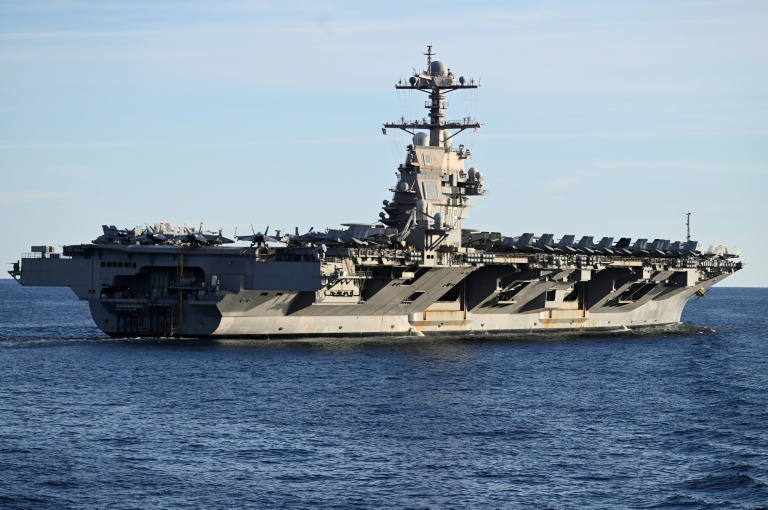
As the 2024 U.S. presidential election looms, a familiar and unsettling ambiguity has re-emerged in American foreign policy discourse. In a recent interview, former President Donald Trump, the presumptive Republican nominee, declined to rule out the possibility of military intervention in Venezuela, stating he would “do whatever I have to do” to protect American interests. This calculated non-denial marks a potential sharp departure from the Biden administration’s approach and signals a possible return to the volatile “maximum pressure” campaign of Trump’s first term.
The Shadow of the First Term
To understand the weight of Trump’s statement, one must revisit the tense period of 2017-2020. The Trump administration levied crippling sanctions on Venezuela’s oil, financial, and government sectors, recognized opposition leader Juan Guaidó as the legitimate president, and repeatedly hinted that “all options are on the table.” At the height of the tension in 2019, officials like then-National Security Advisor John Bolton openly stated the goal was a “peaceful transfer of power,” but the relentless rhetoric and military exercises in the region created a palpable threat of conflict.
The current context, however, is different. President Nicolás Maduro, though still presiding over a profound humanitarian crisis, has consolidated power. The opposition is fractured, and key international players are increasingly engaging with his government. The Biden administration, while maintaining sanctions, has shifted focus to targeted diplomatic engagements, most notably negotiating a limited agreement on elections and cautiously easing some oil sanctions in exchange for democratic concessions.
Decoding the “Whatever I Have to Do” Doctrine
Trump’s refusal to rule out force is not a detailed policy blueprint but a strategic signal. It serves several purposes:
-
Projecting Strength: For Trump’s political base, it reinforces an image of uncompromising American power, contrasting with what he frames as Biden’s “weakness.”
-
Leverage in Negotiation: The explicit threat of force is a classic tool of coercive diplomacy. It is designed to force Maduro back to the negotiating table from a position of perceived U.S. ultimate resolve.
-
A Message to Adversaries & Allies: The statement is a warning to actors like Russia, China, and Iran, whose support props up the Maduro regime. It also pressures regional allies to fall in line with a more confrontational U.S. stance.
The Risks of Strategic Ambiguity
While supporters argue this ambiguity strengthens the U.S. hand, critics warn of severe dangers:
-
Regional Backlash: Latin America has a deep historical aversion to U.S. military intervention. A renewed drumbeat of war could shatter regional cooperation and push countries closer to Caracas in defiance of Washington.
-
Humanitarian Catastrophe: Any military action in a country already on its knees would almost certainly exacerbate the suffering of the Venezuelan people, triggering a new wave of displacement.
-
Geopolitical Entanglement: Venezuela has deepening military ties with Russia and Iran. A U.S. intervention risks a proxy conflict or retaliatory actions elsewhere in the world.
-
The Bluff Factor: If the threat is seen as a mere campaign tactic with no intent to follow through, it could irreparably damage U.S. credibility, making future diplomatic threats meaningless.
The Stakes for Venezuela and the World
For the Venezuelan people, Trump’s words are a chilling prospect. Many opposition figures who once welcomed Trump’s pressure now fear that talk of war could unite a fractured nation behind Maduro under a banner of patriotism and repel crucial international support for their cause.
Globally, it signals a potential return to a more unilateral and confrontational U.S. foreign policy. The oil markets, already sensitive to Middle Eastern tensions, would react nervously to the threat of conflict in a country with the world’s largest proven oil reserves.
Conclusion:
Donald Trump’s refusal to take war off the table with Venezuela is more than a headline; it is a fork in the road. It presents a choice between a path of relentless, escalatory pressure where the ultimate tool of force remains in the spotlight, and a path of hard-nosed, multilateral diplomacy that seeks to avoid another devastating conflict in the Western Hemisphere.
As the election approaches, the world is reminded that the future of Venezuela—and the stability of Latin America—may once again hinge on the volatile calculus of Trump’s “whatever I have to do” doctrine. The question is no longer just about sanctions or diplomacy, but about whether the specter of war is a tool of statecraft or a step toward a catastrophic failure of it.