

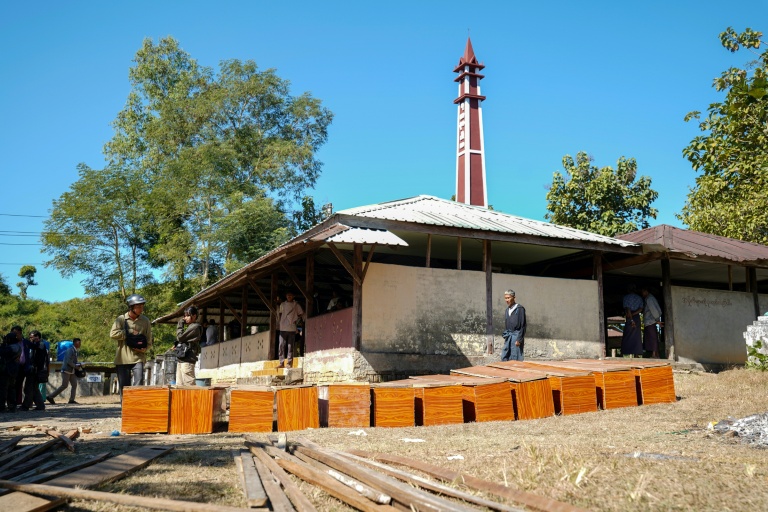
In the hazy, conflict-scarred landscapes of Myanmar’s Sagaing Region, a hospital became a target. On a late November morning, the sound of approaching aircraft shattered the relative calm of the Nan Nein clinic, followed by the devastating impact of airstrikes. Local resistance groups and eyewitnesses described a scene of horror: medical facilities reduced to rubble, and among the debris, the bodies of at least six civilians, including patients and a healthcare worker.
The global response was swift and condemnatory. Humanitarian organizations, the United Nations, and Western nations decried the attack as a blatant violation of international law, which expressly protects medical facilities in conflict zones. The evidence, including satellite imagery, photographs of the destroyed clinic, and consistent testimonies from the ground, painted a damning picture.
Yet, from the fortified capital of Naypyidaw, the response was not introspection or investigation, but flat, unequivocal denial. The Myanmar military junta, which seized power in a 2021 coup, issued a stark rebuttal: “We didn’t do it.”
This denial is not an isolated incident. It is a recurring refrain in the junta’s playbook, a deliberate strategy deployed in the face of overwhelming atrocity. To understand its significance, one must look beyond the simple contradiction of fact and statement, and into the three-tiered architecture of the junta’s denialism.
Tier 1: The Blanket Rejection
The first and most direct layer is the outright dismissal of events. Junta spokespersons systematically label reports of airstrikes on civilians, massacres, and village burnings as “fake news” or “propaganda orchestrated by terrorist groups.” By dismissing the very source of the information—be it independent media, humanitarian actors, or local defense forces—they attempt to nullify the narrative before it takes root. In the case of the Nan Nein hospital strike, officials simply asserted the reports were fabricated by the People’s Defense Forces (PDF), whom they designate as terrorists.
Tier 2: The Narrative Inversion
When evidence becomes too potent to simply ignore, the strategy shifts to inversion. Here, the junta does not deny an attack occurred, but radically re-frames its nature and purpose. A hospital is reclassified as a “terrorist command center.” Civilian casualties become “collateral damage” in a necessary strike against legitimate military targets. This tactic serves a dual purpose: it provides a thin veneer of legality for international observers while simultaneously demonizing the opposition and justifying further violence to a domestic audience.
Tier 3: The Information Blackout
The most powerful tool underpinning both rejection and inversion is the systematic eradication of independent truth-telling. By imprisoning journalists, revoking media licenses, blocking internet access, and cutting off regions from the outside world, the junta creates a vacuum. In this vacuum, their version of events becomes the only one readily available to many inside Myanmar. The darkness itself becomes an accomplice to denial.
The Cost of the Denial
The human cost of this strategy is immeasurable. For the victims’ families in Nan Nein and countless other villages, denial compounds trauma with injustice. It robs them of acknowledgement, the first step toward any form of healing or accountability.
On a global scale, it erodes the very foundations of humanitarian law. When protected spaces like hospitals can be attacked and the act simply denied, it sets a dangerous precedent and creates a chilling environment for aid workers worldwide.
Furthermore, the cycle of atrocity and denial paralyzes meaningful international action. It creates a frustrating fog of doubt, allowing nations reluctant to intervene to cite “conflicting reports” as a reason for inaction, while the junta’s allies can point to the denials as sufficient counter-evidence.
Beyond the Words
The international community’s challenge is to see the junta’s denials for what they are: not as credible counter-arguments to be debated, but as a core component of a military strategy aimed at terrorizing populations and evading responsibility. The evidence from Myanmar—from mass graves to burned villages to bombed hospitals—forms a consistent pattern that speaks louder than any official statement from Naypyidaw.
As the conflict grinds on, the stones of Sagaing and the shadows of denial tell two competing stories. One is written in the scars of the land and the testimony of its people. The other is issued in sterile press releases from a regime that has learned that in the modern world, sowing confusion can be as effective as wielding power. Recognizing this strategy is the first step in refusing to be its victim. The truth, though buried under rubble and obscured by lies, persists.