


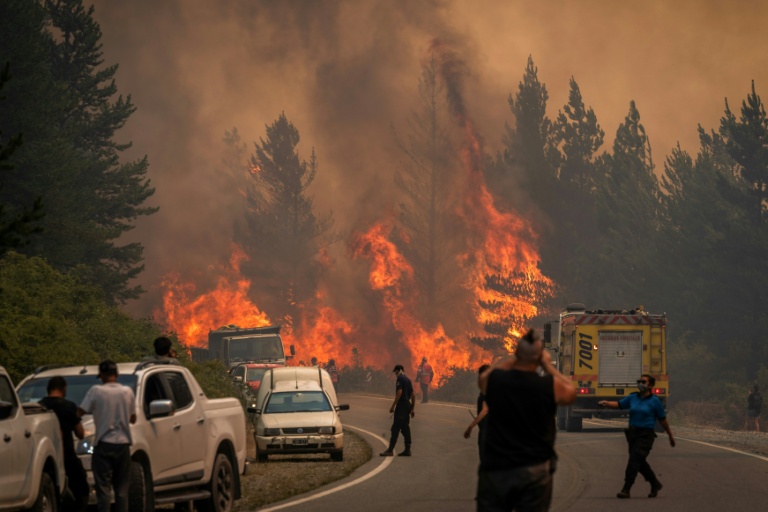
A fierce and fast-moving wildfire is sweeping across the rugged landscape of Argentine Patagonia, transforming vast stretches of iconic wilderness into a charred and smoking wasteland. Authorities have confirmed that the blaze has already consumed over 15,000 hectares (approximately 37,000 acres), primarily within the Los Alerces National Park, a UNESCO World Heritage Site renowned for its ancient forests, glacial lakes, and biodiversity.
The fire, which began under investigation but is suspected to be human-caused, has been fueled by a dangerous convergence of factors: a severe drought gripping the region, record-high temperatures for the Southern Hemisphere summer, and persistent, strong winds characteristic of the Patagonian steppe. These conditions have turned the dense native forest of cypress, coihue, and lenga, along with dry grasslands, into a highly flammable tinderbox.
A Crisis in a World Heritage Site
The heart of the devastation lies within Los Alerces National Park, famed for its millennial alerce (Patagonian cypress) trees, some over 2,600 years old. While the ancient alerce groves in the park’s core are reportedly safe for now, the fire threatens critical ecosystems that are home to endangered species like the huemul (South Andean deer) and the torrent duck. The visual impact is stark, with satellite imagery and ground reports showing a vast, dark scar spreading across the region near the tourist towns of Esquel and Trevelin.
A Massive and Dangerous Response
More than 200 firefighters, National Parks personnel, and volunteers are engaged in a grueling battle against the flames. They are supported by water-bombing planes and helicopters, which have been making continuous runs to douse hotspots and create containment lines. The operation is fraught with difficulty due to the inaccessible, mountainous terrain and the unpredictable wind, which can cause the fire to change direction in an instant.
“The fire behavior is extreme,” reported a provincial fire management official. “The wind is our biggest enemy. Every time it picks up, the perimeter expands, and our work becomes more dangerous.”
Local communities have been on high alert. While no major population centers have been evacuated, some rural residents and ranchers have been forced to move livestock and prepare to leave at a moment’s notice. A thick, choking haze has blanketed the area, raising serious air quality concerns and casting an eerie orange glow over the landscape.
A Recurring Nightmare with a Global Echo
For Argentines, this disaster is a painful echo of the catastrophic 2021 fires in Corrientes and the devastating 2015 blazes in Chile’s Patagonia, which also burned across the border into Argentina. Scientists and environmentalists point to a clear pattern linking these increasingly intense and frequent fires to climate change, which exacerbates drought conditions and creates longer, more dangerous fire seasons.
“This isn’t just an accident; it’s a symptom,” said an ecologist from the National Scientific and Technical Research Council (CONICET). “Patagonia is drying and warming. What we are seeing is the collision of climatic vulnerability with human activity. Protecting these ecosystems is no longer just about conservation; it’s about crisis management.”
As firefighters continue their relentless work, the nation watches, hoping for a shift in the weather—a saving rain that has yet to appear. The scorched 15,000 hectares stand as a grim testament to the fragility of one of the planet’s most beautiful regions and a urgent warning of the fiery future that may lie ahead if broader environmental challenges are not met with decisive action. The battle for Patagonia’s soul is being fought not just on the fire lines, but in the global conversation about our planet’s health.