


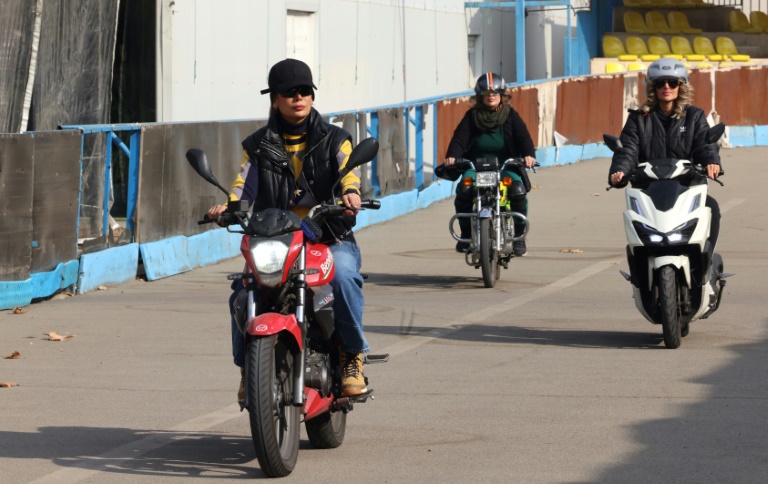
On the vast, sun-scorched highways stretching between ancient Persian cities and through rugged mountain passes, a quiet revolution is rolling forward on two wheels. They are a growing, though still uncommon, sight: Iranian women, clad in riding gear, helmets firmly secured, navigating not just the physical terrain of their country but a far more complex landscape of legal ambiguity and deep-seated social resistance. These are Iran’s women bikers, and their journey is one of profound courage, technical skill, and an unyielding claim to public space.
For these riders, the motorcycle is more than a vehicle; it is a symbol of autonomy, freedom, and a very personal form of protest. In a nation where women’s mobility, attire, and presence in public are heavily scrutinized and legally restricted, simply sitting astride a bike becomes a powerful act. “When I ride, I feel an indescribable freedom. The wind doesn’t discriminate,” says Sara (a pseudonym), a 32-year-old graphic designer from Tehran. “For those hours, the road is mine. I am judged by my control of the machine, not by how I look or where I am supposed to be.”
The obstacles they face are formidable, woven from both law and tradition.
The Legal Grey Zone: There is no explicit law banning women from obtaining a motorcycle license or owning a bike. Technically, it is possible. However, the practice is mired in obstruction. Many local traffic authorities simply refuse to process women’s license applications or administer the mandatory tests. Insurance companies often deny them coverage. Some have navigated this by obtaining licenses for lower-powered scooters or through persistent, years-long appeals, while others ride without formal documentation, accepting the constant risk of police fines or impoundment.
Social Stigma and Safety: The greater challenge often lies off the books. Motorcycling in Iran is culturally coded as a masculine, and sometimes rebellious, activity. A woman on a bike directly challenges conservative norms of femininity and propriety. They face harassment—from verbal taunts and disapproving glares to physical intimidation by male drivers. Safety is a paramount concern, not just from traffic but from social backlash. Consequently, many women ride in groups, finding strength and protection in numbers. These informal clubs, often connected through social media, are vital support networks for planning routes, sharing mechanical knowledge, and fostering solidarity.
The Dress Code Dilemma: The mandatory hijab law adds another layer of complexity. Riders must creatively reconcile safety gear with state-mandated modest dress. Loose headscarves are a hazard near moving parts; bulky coats can compromise protective armor. Many opt for integrated helmet covers, tailored riding jackets over their clothing, and pants designed for both protection and modesty—constantly negotiating between the demands of safety, the law, and personal belief.
Despite these hurdles, the community is not just persisting but growing. Social media platforms like Instagram (filtered but accessible in Iran) have been instrumental. Private accounts and closed groups allow women to share their stories, photos from the road, and technical advice away from the public eye and potential reprisal. These digital spaces have been crucial for organization and visibility, inspiring others to join. Their rides, often to scenic spots or historical sites, are documented testaments to their presence and perseverance.
The movement is not monolithic. Their motivations vary: some seek pure adrenaline and the thrill of the machine; others frame it as a feminist act of reclaiming public space; for many, it’s a deeply personal quest for mental peace and self-reliance. Yet, they are united by a common thread: the transformative power of the ride itself.
“They tell us it’s not our place, that it’s dangerous, that it’s un-Islamic,” says Neda (a pseudonym), a teacher and rider from Isfahan. “But when we ride, we are demonstrating capability and courage. We are showing that our will cannot be easily confined. The road does not belong to one gender.”
Iran’s women bikers are mapping a new path forward, kilometer by hard-won kilometer. Their journey is less about a destination and more about the act of movement itself—a declaration that their place is wherever they choose to steer, despite every obstacle placed in their lane. In their resilience, they embody a powerful truth: freedom is not always a right granted; sometimes, it is a throttle twisted firmly in hand, propelling oneself defiantly into the open air.