


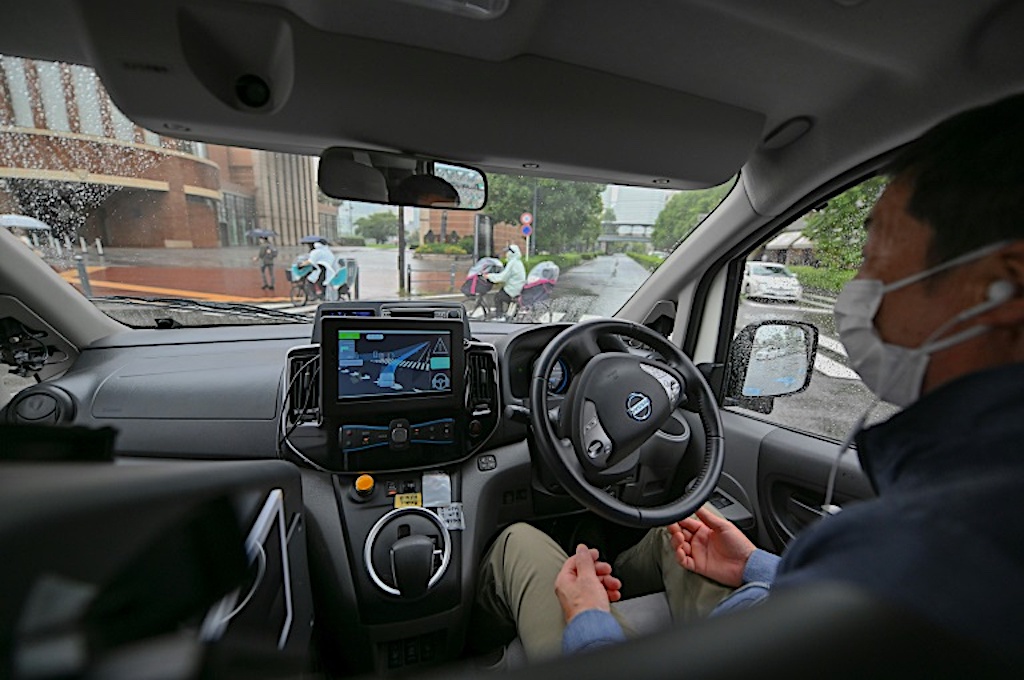
For decades, the dream of self-driving cars has captivated our collective imagination, from science fiction novels to futuristic concept cars. Today, that dream is rapidly becoming reality as autonomous vehicle (AV) technology advances at an unprecedented pace. Beyond the convenience of hands-free commuting, the most compelling case for autonomous vehicles lies in their potential to dramatically improve road safety and transportation reliability. A growing body of research suggests that when fully realized, autonomous vehicles could transform our relationship with transportation, saving countless lives and creating more efficient mobility systems.
The Human Error Equation
The fundamental promise of autonomous vehicle safety stems from one sobering statistic: approximately 94% of serious crashes are attributed to human error, according to the National Highway Traffic Safety Administration. Whether due to distraction, impairment, fatigue, or simple misjudgment, human drivers bring inconsistencies and vulnerabilities to the road that machines theoretically would not.
Autonomous systems don’t get tired, distracted by text messages, or drive under the influence. They maintain 360-degree awareness at all times, process information from multiple sensors simultaneously, and react with precision timing measured in milliseconds rather than the second-or-more response time of even alert human drivers.
Research from the RAND Corporation suggests that even imperfect autonomous vehicles could save lives if they perform just marginally better than human drivers. Their modeling indicates that widespread adoption of AVs that are just 10% safer than human drivers could prevent thousands of fatalities over the technology’s rollout period.
The Sensor Advantage: Seeing What Humans Can’t
Modern autonomous vehicles utilize a sophisticated suite of sensors—LiDAR, radar, cameras, and ultrasonic detectors—that work in concert to perceive the driving environment. This multi-layered approach creates redundancy and provides capabilities beyond human senses.
These systems can “see” through fog, rain, and darkness with radar and LiDAR, detect objects in blind spots consistently, and maintain attention on all surroundings simultaneously. They don’t experience “look but fail to see” errors that contribute to many pedestrian and cyclist collisions. Research from the Virginia Tech Transportation Institute found that prototype autonomous vehicles already demonstrate better object detection and reaction times in many scenarios compared to human drivers.
Predictive Safety and Consistency
Beyond reactive capabilities, autonomous systems excel at predictive safety. Through machine learning algorithms trained on millions of miles of driving data, AVs can anticipate potential hazards before they fully materialize. They can predict the trajectory of a ball rolling into the street (possibly followed by a child) or recognize subtle patterns indicating a driver in an adjacent lane might be about to change lanes without signaling.
This predictive capacity extends to vehicle-to-vehicle (V2V) and vehicle-to-infrastructure (V2I) communication in development. In a fully connected transportation ecosystem, vehicles could share information about road conditions, traffic patterns, and potential hazards in real-time, creating a collaborative safety network far beyond what individual human drivers can achieve.
Reliability Beyond Safety
The promise of autonomous vehicles extends beyond crash prevention to transportation reliability. Traffic flow optimization represents a significant benefit—AVs can maintain consistent speeds and spacing, reducing the “accordion effect” of human-driven traffic waves that cause congestion. Studies from the University of Illinois suggest that even a small percentage of autonomous vehicles properly managing following distances could reduce stop-and-go traffic by up to 90%.
For individuals, the reliability benefits are equally compelling. Elderly individuals and those with disabilities gain unprecedented mobility independence. Ride-sharing and mobility-as-a-service models utilizing AV fleets could provide consistent, affordable transportation options in areas underserved by public transit. Delivery and logistics could operate with precise timing regardless of human driver constraints.
Challenges on the Road to Autonomy
Despite the promising research, significant challenges remain before autonomous vehicles achieve their full safety potential. Edge cases—rare, complex scenarios—still pose difficulties for AI systems. Ethical decision-making in unavoidable crash scenarios raises philosophical and programming questions. Cybersecurity vulnerabilities must be addressed to prevent malicious interference. And the transition period, with mixed human and autonomous vehicles sharing roads, presents unique challenges.
Furthermore, public trust remains a hurdle. High-profile accidents involving autonomous vehicles, though statistically rare compared to human-caused crashes, receive disproportionate media attention and affect public perception. Developing transparent safety standards, rigorous testing protocols, and effective regulatory frameworks will be essential for building trust.
The Path Forward
The evolutionary path to full autonomy is gradual, with most experts anticipating decades before fully autonomous vehicles dominate roads. During this transition, advanced driver assistance systems (ADAS) are already delivering safety benefits today—automatic emergency braking, lane-keeping assistance, and adaptive cruise control represent stepping stones toward full autonomy that are already reducing crashes.
As the technology matures, researchers emphasize that the greatest safety gains will come from holistic systems integrating autonomous vehicles with smart infrastructure, standardized communication protocols, and updated urban design. The future of transportation safety isn’t just about better cars, but about better integrated systems.
Conclusion
While autonomous vehicle technology continues to develop, the research direction is clear: properly implemented autonomous systems have the potential to be significantly safer and more reliable than human drivers. The transition won’t be instantaneous or without challenges, but the destination promises a transportation landscape with dramatically reduced fatalities, increased mobility access, and more efficient use of our road networks.
As we navigate this technological revolution, our focus should remain on thoughtful implementation, continuous improvement, and maintaining safety as the paramount priority. The road ahead may be long, but it leads toward a future where getting from point A to point B is not just automated, but fundamentally safer for everyone.